 Reviews


Introduction
Choosing the right water heater is one of the most important decisions you'll make as a homeowner. Your water heating system accounts for roughly 18-20% of your home's energy consumption, making it the second-largest energy expense after heating and cooling. With water heaters typically lasting 10-15 years, the choice you make today will impact your comfort, utility bills, and home value for well over a decade.
The debate between tankless and traditional tank water heaters has intensified as energy efficiency becomes increasingly important to homeowners. Traditional storage tank water heaters have served homes reliably for generations, but tankless on-demand systems have gained popularity for their efficiency and space-saving design. Each system offers distinct advantages and limitations that make them suitable for different households, lifestyles, and budgets.
Understanding the key differences between these two water heating technologies empowers you to make an informed decision that aligns with your family's needs, your home's infrastructure, and your long-term financial goals.
Understanding Traditional Tank Water Heaters
How They Work
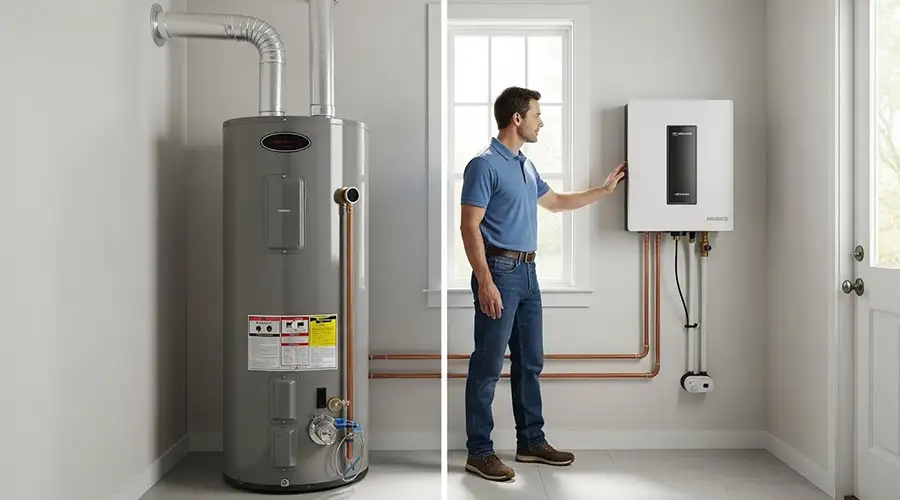
Traditional water heaters store 30-80 gallons of heated water in an insulated tank, maintaining a constant temperature through continuous heating cycles. When you use hot water, cold water enters the tank to replace it, triggering the heating element or gas burner to restore the set temperature.
Advantages of Traditional Water Heaters
Lower Initial Investment
Tank water heaters typically cost $800-$1,500 for the unit, with installation adding another $500-$1,000. This significantly lower upfront cost makes them accessible for budget-conscious homeowners or those facing unexpected replacement needs.
Simple Installation and Replacement
If your home already has a tank system, replacing it with another tank model is straightforward and quick. Most installations complete within a few hours without requiring electrical upgrades or gas line modifications.
Familiar Technology and Easier Repairs
Plumbers everywhere understand traditional water heaters, making repairs simpler and more affordable. Replacement parts are readily available and generally inexpensive compared to tankless components.
Simultaneous High-Volume Usage
Tank systems can supply multiple fixtures simultaneously without noticeable temperature fluctuations, making them ideal for large families with overlapping hot water demands.
Disadvantages of Traditional Water Heaters
- Standby energy loss: Continuous heating wastes energy even when you're not using hot water
- Limited hot water supply: Once the tank empties, you wait 30-60 minutes for reheating
- Larger footprint: Requires significant floor space in utility areas
- Shorter lifespan: Typically lasts 10-12 years before requiring replacement
- Higher operating costs: Less energy-efficient, resulting in elevated utility bills
Understanding Tankless Water Heaters
How They Work
Tankless systems heat water instantly as it flows through the unit. When you open a hot water tap, cold water travels through a pipe into the heater, where powerful heating elements or gas burners rapidly heat it to your desired temperature. Water heats on-demand, eliminating the need for storage.
Advantages of Tankless Water Heaters
Unlimited Hot Water Supply
Tankless heaters never run out of hot water because they heat continuously as needed. Long showers, back-to back baths, and simultaneous appliance use become possible without concern for depleting your supply.
Superior Energy Efficiency
By eliminating standby heat loss, tankless systems are 24-34% more energy-efficient for homes using 41 gallons or less of hot water daily. This efficiency translates to $100-$200 annual savings on utility bills.
Compact, Space-Saving Design
Wall-mounted tankless units occupy minimal space—roughly the size of a small suitcase—freeing valuable square footage in utility rooms, basements, or closets for storage or other purposes.
Extended Lifespan
Quality tankless water heaters last 20+ years with proper maintenance, nearly double the lifespan of traditional tanks. This longevity offsets higher initial costs over time.
Reduced Risk of Water Damage
Without a large tank that can rupture, the risk of catastrophic water damage from tank failure is eliminated.
Disadvantages of Tankless Water Heaters
- Higher upfront costs: Units cost $1,000-$3,000, with installation ranging from $1,500-$3,500
- Complex installation: May require electrical upgrades, gas line modifications, or venting changes
- Flow rate limitations: Lower-end models struggle with multiple simultaneous demands
- Temperature inconsistency: Brief delays and fluctuations can occur when starting water flow
- Higher maintenance requirements: Annual descaling necessary in hard water areas
Comparing Key Factors: Making Your Decision
Energy Efficiency and Operating Costs
Tankless systems win decisively on efficiency, potentially saving $1,500-$2,500 over their lifespan compared to traditional tanks. However, these savings take 6-12 years to offset higher installation costs.
Household Size and Hot Water Demand
- 1-2 people: Tankless systems excel for smaller households with modest, sequential usage
- 3-4 people: Either system works, depending on usage patterns and budget priorities
- 5+ people: Traditional tanks or multiple tankless units handle heavy simultaneous demands better
Installation Considerations
Evaluate your home's current setup:
- Adequate electrical capacity for electric tankless units (120-200 amps)
- Proper gas line size for gas tankless models
- Appropriate venting for combustion
- Available installation space
Long-Term Value and Home Resale
Tankless water heaters appeal to environmentally conscious buyers and can increase home value. However, traditional tanks remain perfectly acceptable and won't negatively impact property values.
Making the Right Choice for Your Home
Consider tankless water heaters if you:
- Prioritize energy efficiency and lower operating costs
- Need unlimited hot water for your lifestyle
- Have limited space for equipment
- Plan to stay in your home long-term to recoup installation costs
- Live in an area with professional tankless installation expertise
Choose traditional tank water heaters if you:
- Have a limited budget for upfront costs
- Need immediate replacement without home modifications
- Require high-volume simultaneous usage regularly
- Prefer proven, familiar technology
- Live in areas with extremely cold incoming water temperatures
When to Call a Professional Plumber
Never attempt water heater installation as a DIY project. Professional installation ensures:
- Proper sizing calculations for your household needs
- Correct electrical, gas, and venting connections
- Compliance with local building codes and permits
- Warranty protection and safe operation
- Optimal system performance and efficiency
Schedule a consultation with a licensed plumber to assess your specific situation, discuss your priorities, and receive personalized recommendations based on your home's infrastructure and your family's needs.
Conclusion
The tankless versus traditional water heater debate doesn't have a universally correct answer—the best choice depends entirely on your unique circumstances. Traditional tank water heaters offer reliability, affordability, and simplicity, making them excellent choices for budget-conscious homeowners and larger families. Tankless systems provide superior efficiency, unlimited hot water, and space savings that appeal to eco-conscious homeowners planning long-term residence.
Both technologies deliver dependable hot water when properly sized, professionally installed, and regularly maintained. Rather than searching for the "best" option in absolute terms, focus on identifying which system best aligns with your budget, household size, usage patterns, home infrastructure, and long-term goals.
Get Expert Guidance on Your Water Heater Decision
Choosing between tankless and traditional water heaters requires professional expertise and careful consideration of your home's unique requirements. Contact our experienced plumbing team today for a comprehensive assessment of your current system, detailed cost analysis, and personalized recommendations. We'll help you select and install the perfect water heating solution that delivers comfort, efficiency, and value for years to come. Call now to schedule your free consultation!